
GUIDES · REHABILITATION
Recovery guide for Carpal Tunnel & Trigger Finger.
A step-by-step approach to using progressive resistance training and kinesthetic feedback to rehabilitate two of the most common hand and wrist conditions.
UNDERSTANDING THE CONDITIONS
What are Carpal Tunnel and Trigger Finger?
Both conditions affect the tendons and nerves that power your hands — but in different ways. Carpal Tunnel Syndrome is a compressive neuropathy: the median nerve becomes squeezed at the wrist, leading to numbness, tingling, and weakness. Trigger Finger (stenosing tenosynovitis) is a tendon issue: the flexor tendon swells and catches inside its sheath, causing the finger to lock or snap.
The good news: both respond well to controlled, progressive loading — the same principle that makes FingerWeights effective for musicians and athletes also works for rehabilitation.
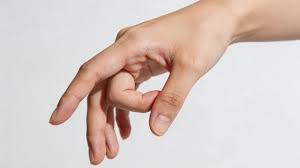
Carpal Tunnel Syndrome
- Compression of the median nerve in the wrist
- Numbness, tingling, and weakness in the hand
- Often caused by repetitive motion or prolonged wrist flexion
- Common among musicians, typists, gamers, and manual laborers
Trigger Finger
- Inflammation of the flexor tendon in the finger
- Finger catches or locks when bent, then snaps straight
- Often caused by repetitive gripping or grasping
- More common in the thumb, ring, and middle fingers
WHY PROGRESSIVE RESISTANCE WORKS
Can you lift weights with Carpal Tunnel or Trigger Finger?
Heavy gripping and wrist-loaded exercises — dumbbells, barbells, kettlebells — often compress the carpal tunnel or irritate the flexor tendon sheath. That does not mean strength training is off the table. It means the type of load matters.
Graded loads (10g–90g) let you start well below pain threshold
Progressive overload rebuilds tendon and muscle strength safely
Kinesthetic feedback reconnects brain and hand during movement
Adjustable resistance matches your recovery stage week by week
FingerWeights let you train strength and endurance without gripping. The load is applied directly to each finger, keeping the wrist neutral and the tendon gliding smoothly — exactly what irritated tendons and compressed nerves need.
CARPAL TUNNEL PROTOCOL
A 4-phase recovery plan.
Phase 1: Pain-Free Motion
Weeks 1–2- Load:
- 10g–20g per finger
- Focus:
- Gentle range of motion, no resistance through painful arcs
- Duration:
- 5–10 minutes, 2× daily
Phase 2: Light Loading
Weeks 3–4- Load:
- 20g–40g per finger
- Focus:
- Controlled flexion and extension with mild resistance
- Duration:
- 10 minutes, 2× daily
Phase 3: Progressive Strengthening
Weeks 5–8- Load:
- 40g–70g per finger
- Focus:
- Full range of motion, increased time under tension
- Duration:
- 10–15 minutes, 2–3× daily
Phase 4: Maintenance & Resilience
Week 8+- Load:
- 70g–90g per finger
- Focus:
- Endurance and prehab to prevent recurrence
- Duration:
- 15 minutes, 3–5× weekly
TRIGGER FINGER PROTOCOL
Rebuild tendon glide and strength.
Phase 1: Gentle Gliding
Weeks 1–2- Load:
- 10g–20g
- Focus:
- Smooth tendon gliding without triggering or catching
- Duration:
- 5 minutes, 2× daily
Phase 2: Controlled Resistance
Weeks 3–5- Load:
- 20g–40g
- Focus:
- Slow, deliberate flexion and extension through full range
- Duration:
- 8–10 minutes, 2× daily
Phase 3: Strength Rebuilding
Weeks 6–10- Load:
- 40g–70g
- Focus:
- Rebuild tendon resilience and grip endurance
- Duration:
- 10–15 minutes, 2–3× daily
Phase 4: Functional Return
Week 10+- Load:
- 60g–90g
- Focus:
- Return to normal activity with embedded prehab routine
- Duration:
- 15 minutes, 3–5× weekly
KEY PRINCIPLES
Rehab smart, not hard.
Never push through sharp pain — mild discomfort is expected, pain is not
Consistency beats intensity: short daily sessions outperform occasional long ones
Warm up hands with warm water or gentle massage before each session
Track your resistance level and session time to visualize progress
Consult your OT, PT, or hand specialist before starting any rehab program
Medical disclaimer
This guide is for educational purposes and should not replace professional medical advice. Always consult a qualified hand therapist, occupational therapist, or physician before beginning any rehabilitation program, especially after surgery or if symptoms are severe.
COMMON QUESTIONS
Answering the questions patients ask most.
Can I lift weights with Carpal Tunnel?
Traditional heavy weightlifting can aggravate Carpal Tunnel by increasing wrist compression. FingerWeights offer a safer alternative: they load the fingers directly while keeping the wrist in a neutral position, allowing graded strength work without the compressive forces of barbells or dumbbells.
Can I lift weights with Trigger Finger?
Gripping heavy weights often worsens Trigger Finger by stressing the inflamed flexor tendon. FingerWeights bypass the grip problem entirely — the weight sits on the finger itself, letting you strengthen the tendon through its full range of motion with controlled, adjustable loads.
How is this different from therapy putty or hand grippers?
Putty and grippers work the hand as a unit. FingerWeights isolate each digit, which matters when one finger is affected more than others. They also provide real-time kinesthetic feedback: you feel exactly when a finger is lagging or compensating.
When should I start using FingerWeights after surgery?
Always follow your surgeon or therapist's protocol. In most post-surgical cases, gentle range-of-motion work begins around 2–4 weeks, with progressive loading introduced once the incision has healed and swelling has reduced.
Start your recovery with the right tool.
FingerWeights provide the graded, adjustable resistance that Carpal Tunnel and Trigger Finger recovery demand — with the kinesthetic feedback that helps you feel progress in every session.